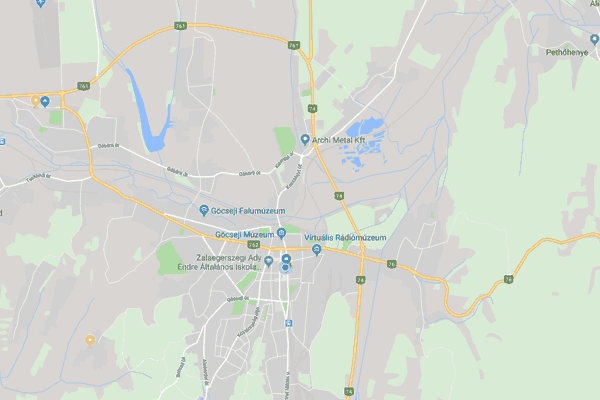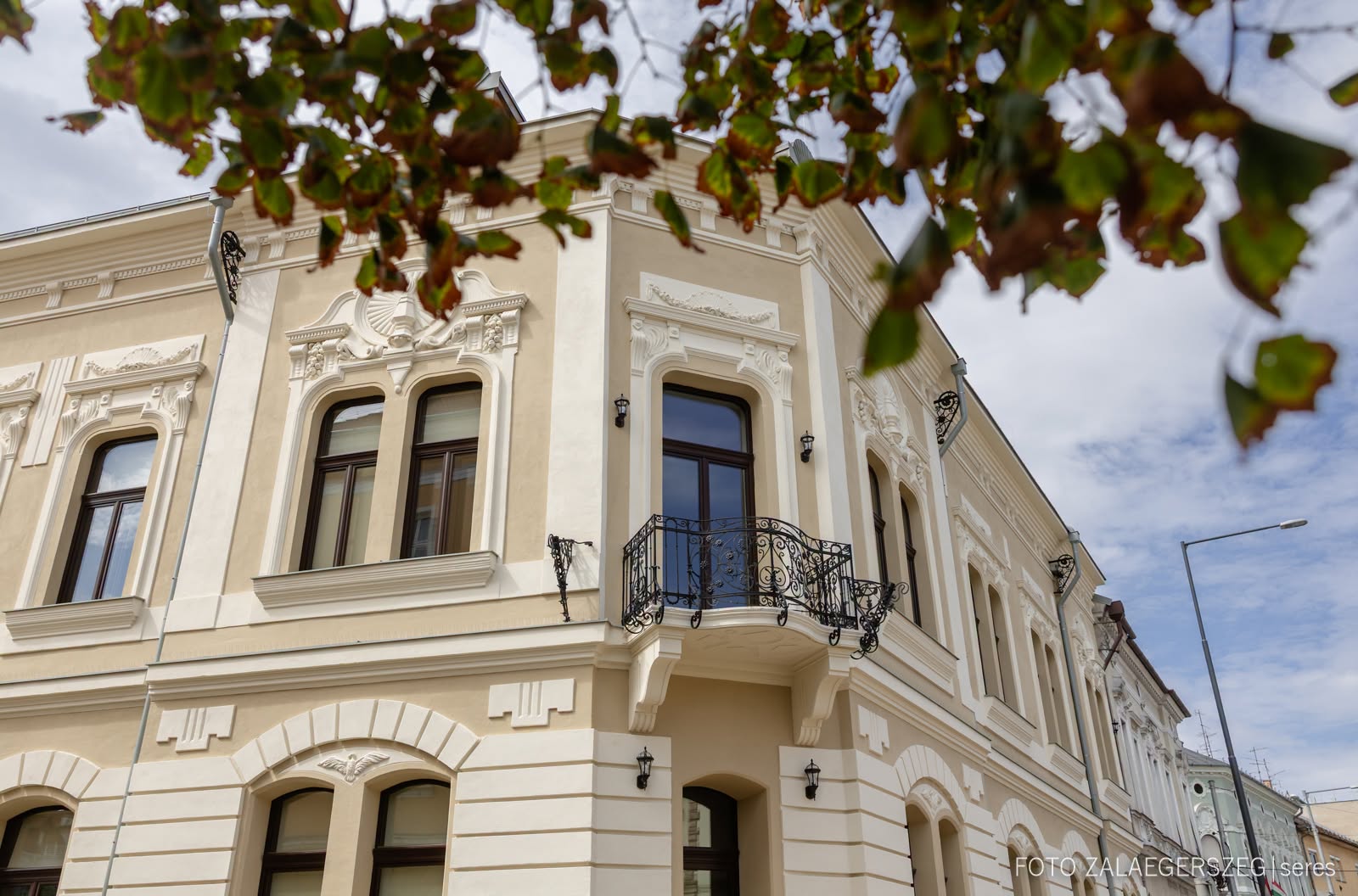
Local residents most commonly remember the building—erected in an eclectic architectural style—as the HEMO (Zalaegerszeg Garrison Cultural Centre). The property was built in 1900 by the affluent Gráner family of merchants and entrepreneurs. Its foyer-like staircase is unique in the city; in earlier times, visitors were greeted by an impressive grand chandelier.
In former days, carts entered the courtyard through a large gate on the Wlassics Gyula (today Ady Endre) Street façade. During the interwar period, the corner ground-floor premises were rented by confectioner Béla Papp, while the side facing Kazinczy Square housed the offices of Kereskedelmi Bank Rt. and grain merchant Dezső Pfeiffer.
After 1945, during the early years of the communist dictatorship, the building was nationalised and under various names converted into a cultural centre for the Hungarian army garrison, hence the name HEMO. Over the decades the interior layout was altered; in the 1970s the attic was built in during a major renovation.
Following the political transition, the building remained state-owned until 2008, when it was purchased by a private entrepreneur whose ambitious redevelopment plans were thwarted by the global economic crisis. The municipality purchased the building in 2021 and had it renovated by the autumn of 2026.